 Projections
 Sign up for the FanDuel Research daily email newsletter!
 Horse Racing
 Soccer
 WNBA
WNBA NASCAR
 UFC
UFC Golf
Golf NCAAB
NCAAB Tennis
 Boxing
 Casino
 Canada
 Sports Betting 101
 TV & Podcasts
 NFL
NFL MLB
MLB NCAAF
NCAAF Horse Racing
 NBA
NBA NHL
NHL Canada
 FanDuel Sportsbook Promos
  Email Sign-Up


How to Play Craps: Rules, Strategies & Gameplay Guide


Introduction – What Is Craps?
Craps is a high‑energy dice game that gives players a number of different ways to wager. The shooter (the player rolling the dice) rolls two six-sided dice, and you predict the outcome of a single throw or a sequence of throws. Your goal is to place chips and guess correctly whether the shooter will succeed in making a point or roll a particular total. Understanding how the game and its rounds work, and the bets with the most value, will help you tremendously when playing at a physical table or online casino.
How to Play Craps
Craps may look complex at first, but each round follows a simple sequence:
- Place your bet. Before the first roll (the “come‑out” roll), place chips on the bet you want to make within the betting area.
- The come‑out roll. The shooter rolls two dice. If the roll is a 7 or 11, Pass Line bets win; if it’s a 2, 3, or 12, Pass Line bets lose. Any other number (4, 5, 6, 8, 9, or 10) establishes the point.
- Point phase. Once a point is set, the shooter keeps rolling. Pass Line bets win if the point number is rolled again before a 7, but they lose if a 7 (“seven‑out”) comes first. Don’t Pass bets win if a 7 appears before the point and lose if the point repeats.
- Additional bets. After a point is set, players may place Come/Don’t Come bets, Place bets, Field bets, or Hardway bets mid‑round. These wagers have their own rules and payout schedules, described below.
A new shooter is selected and a new come‑out roll begins whenever the shooter “seven‑outs” (rolls a 7 before repeating the point). At physical locations, the dice rotate around the table; in online craps, a mechanical arm or random‑number generator handles the throws.
Bet Types and Rules
In craps, you can make a range of bets, each with its own rules and potential payouts.
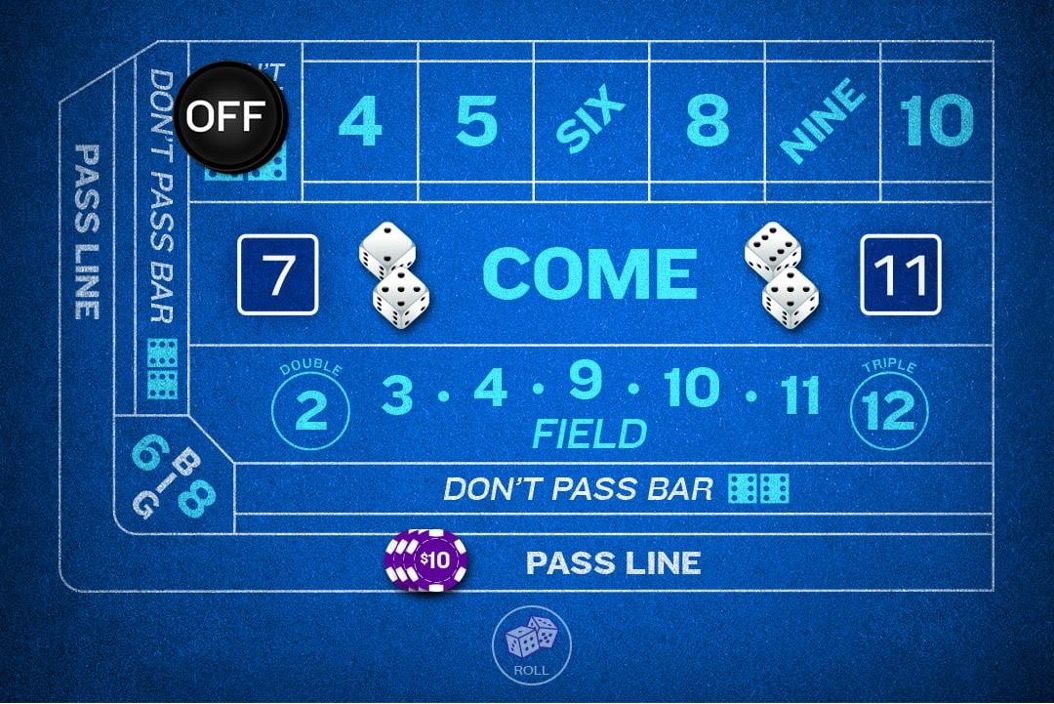
Pass Line Bet
You bet on the shooter to win by rolling a 7 or 11 on the come-out roll, or by establishing a "point" and rolling it again before rolling a 7. These bets pay 1:1.
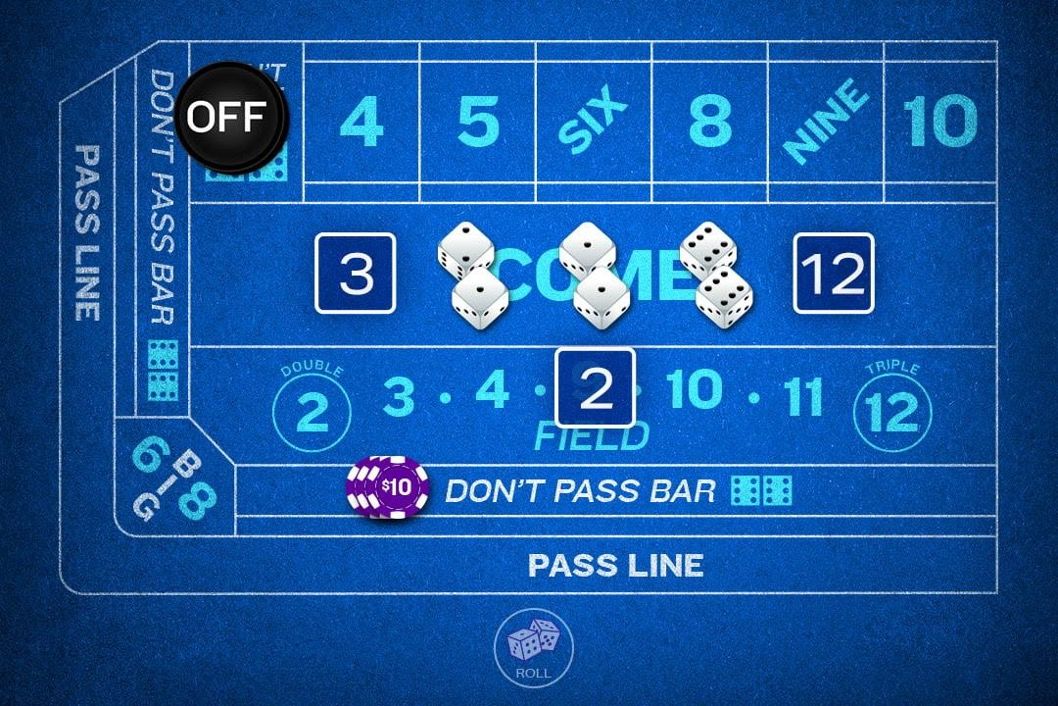
Don't Pass Line Bet
This bet is the opposite of the Pass Line bet. You bet on the shooter to lose by rolling a 2, 3, or 12 on the come-out roll, or by rolling a 7 before rolling the established point. These bets pay 1:1.
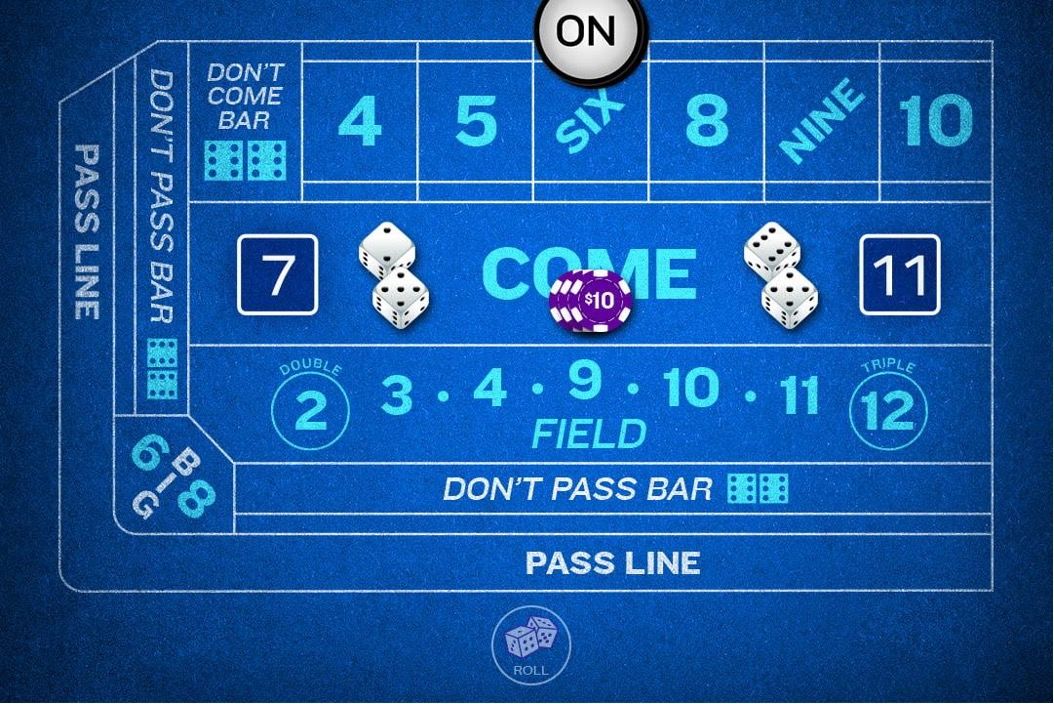
Come Bet
This is similar to the Pass Line bet, but it can be placed after the come-out roll. You're betting on the shooter to roll a 7 or 11 to win, or a 2, 3, or 12 to lose. These bets pay 1:1.
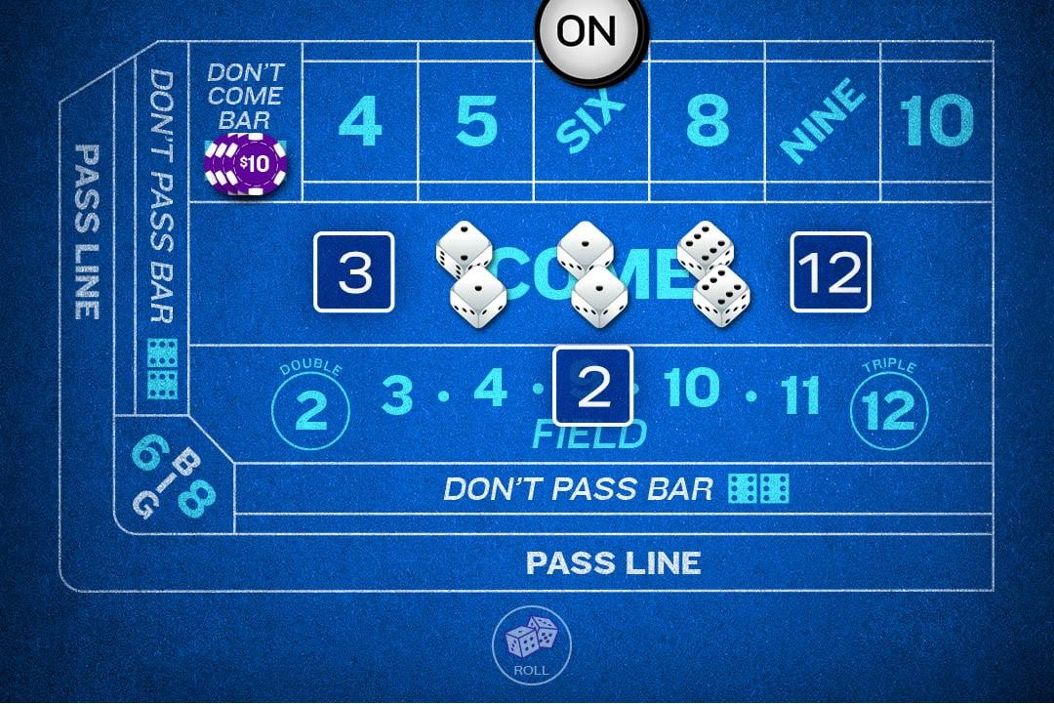
Don't Come Bet
Similar to the Don't Pass Line bet, but it can be placed after the come-out roll. You're betting on the shooter to roll a 2, 3, or 12 to win, or a 7 or 11 to lose. These bets pay 1:1.
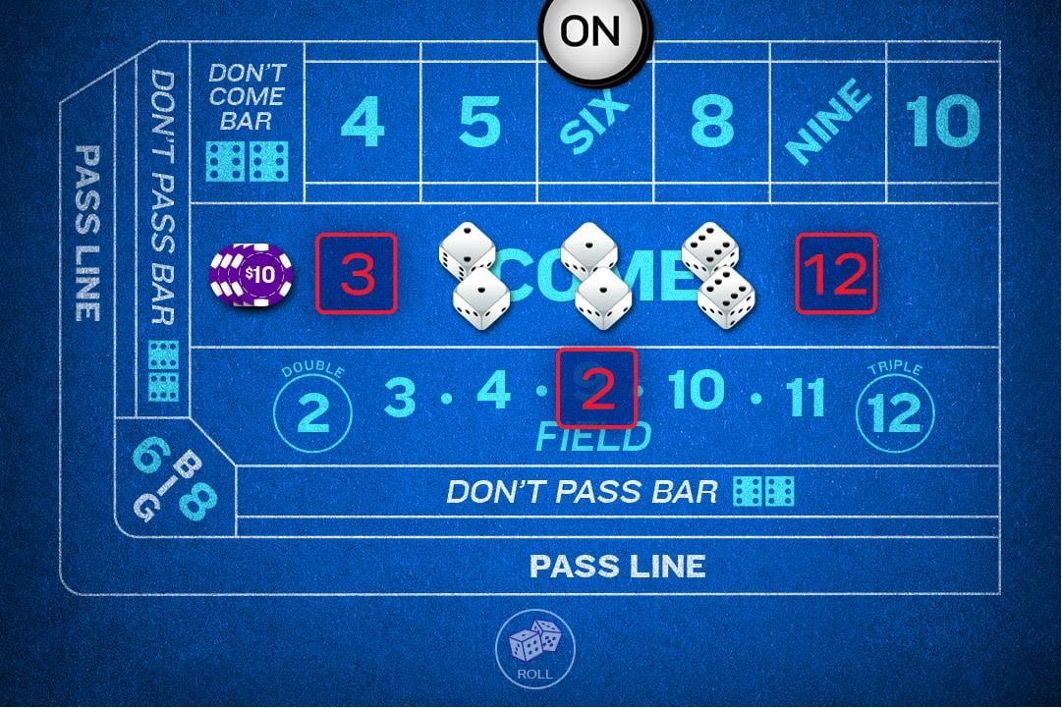
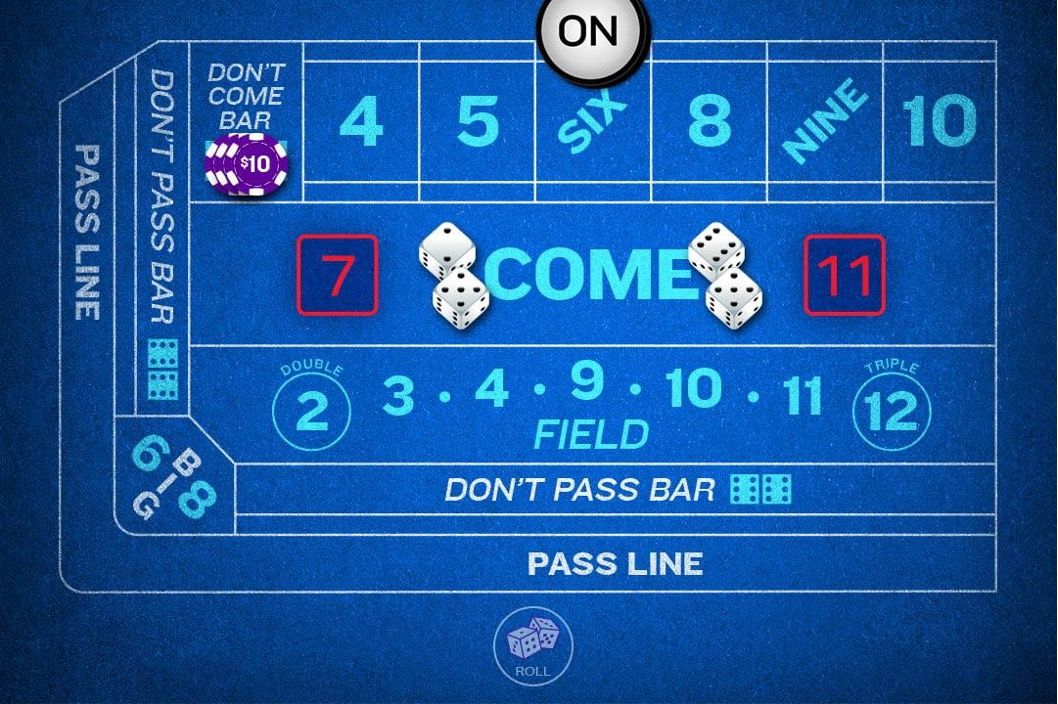
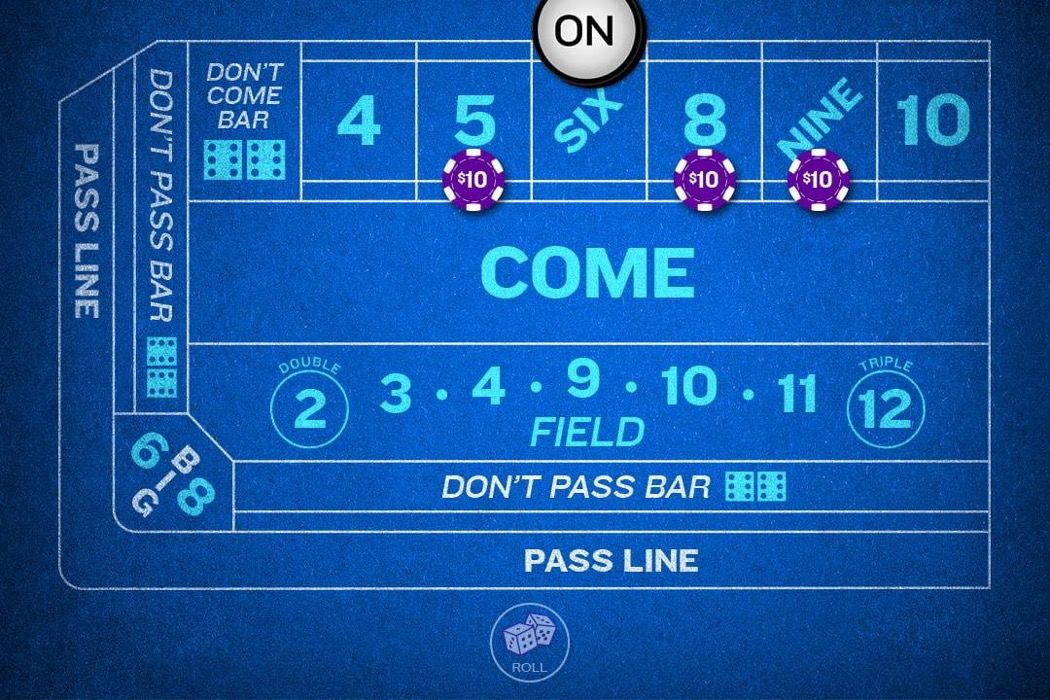
Place Bets
You bet on specific numbers (4, 5, 6, 8, 9, or 10) to be rolled before a 7. Payouts vary for each number.
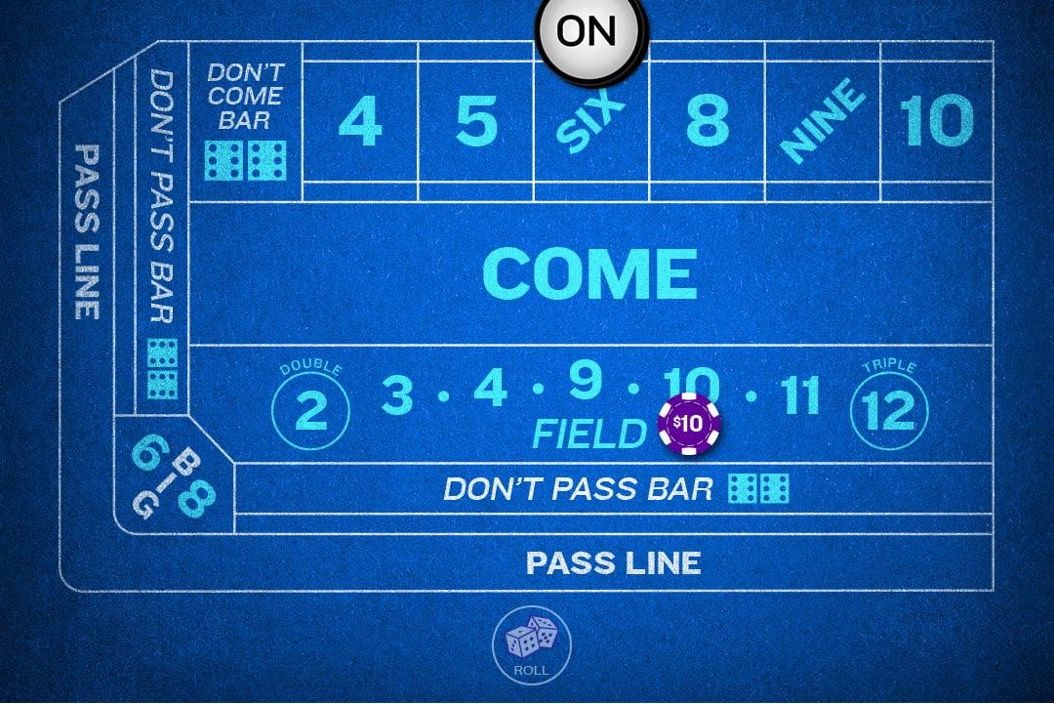
Field Bet
You bet on the next roll resulting in a 2, 3, 4, 9, 10, 11, or 12. Payouts vary depending on which number is rolled.
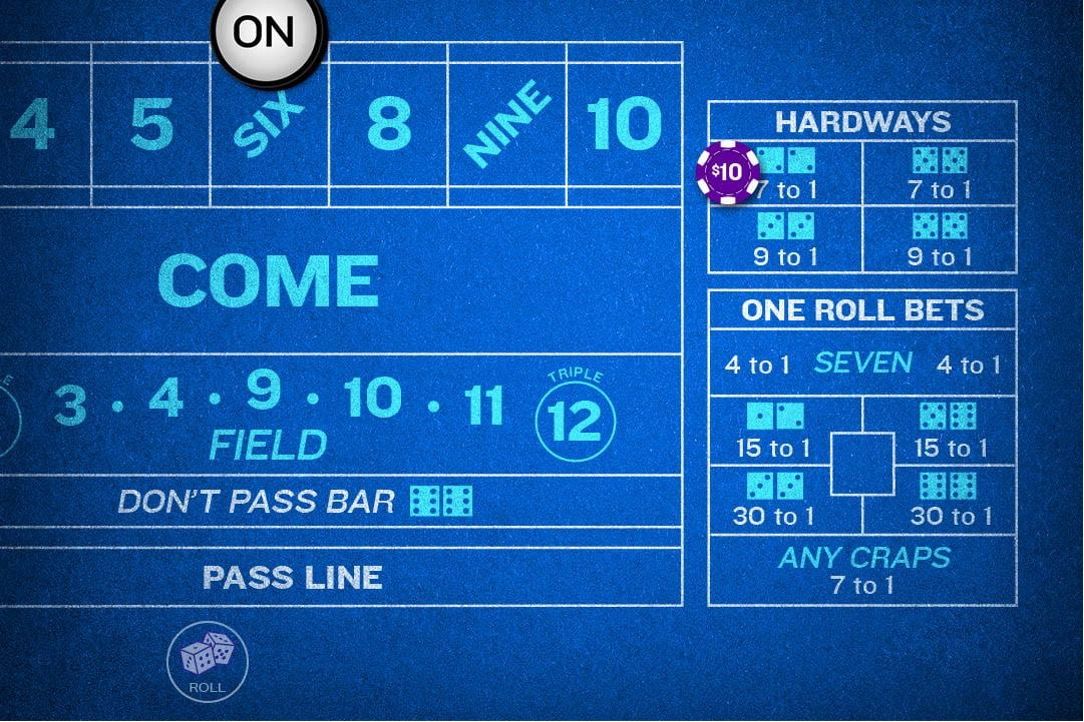
Hardway Bets
You bet that pairs, like two 4s, will be rolled before either a 7 or the pair value is rolled the “easy” way. For example, a bet on two 4s would lose if a 5 and a 3 are rolled. Payouts vary for each specific pair.
Odds, Probabilities, and the House Edge
A Pass Line bet has a house edge of about 1.4%, while a Don’t Pass bet is marginally better at around 1.36%. Taking odds behind these bets—wagers that pay true odds and have no built-in house edge—further reduces your overall expected loss. For example, placing a six-times odds bet behind a Don’t Pass can cut the combined house edge to about 0.19%.
In contrast, Place bets on 6 and 8 have house edges of 1.52%, whereas Place bets on 4 or 10 rise to 6.67%. Big 6/8 wagers and many single‑roll bets carry house edges of 9% or more. Understanding these figures helps you choose bets that offer better value and avoid unfavorable bets.
Variations of Craps
Bank craps (the standard casino game) is the most popular, but several other variants exist. Each has slightly different rules and house edges:
- Simplified craps: Played with the same two dice, but you lose if you roll 5, 6, 7, 8, or 9 and win if you roll 2, 3, 4, 10, 11, or 12; the house edge is around 2.8%.
- High Point craps: Rolls of 2 or 3 are ignored; you win on 11 or 12 and otherwise establish a point and must roll a higher total to win. This variant has a house edge of around 2.35%.
- Crapless (bastard) craps: There is no “crapping out” on the come‑out roll; 2, 3, 11, and 12 all become point numbers. As a result, the house edge rises dramatically, ranging from 1.41% to 5.38%.
- New York craps: Uses a double‑end‑dealer table without Come/Don’t Come areas; you can only bet on 4, 5, 6, 8, 9, or 10. This format changes the payout structure and is popular in the northeast US.
- Die Rich craps: Uses a single die. A roll of 6 is an automatic win, 1 is an automatic loss, and other numbers become the point. You have three chances to hit it before losing.
- Diceless craps: Dice are replaced with cards that generate point numbers. This variant exists in jurisdictions where dice gambling is prohibited.
Online casinos may also offer “crapless craps” and other hybrids—always check the rules and house edge before you play.
Winning Strategies and Tips
No betting system can overcome the statistical probabilities of craps, but you can improve your experience by following these guidelines:
- Stick to low‑edge bets. Pass/Don’t Pass and Come/Don’t Come bets, backed with the maximum allowable odds, offer the best long‑term value.
- Avoid high‑edge wagers. Steer clear of Big 6/8, proposition bets like Any 7 or Any Craps, and most single‑roll bets because their house edges exceed 9%.
- Use odds bets wisely. Adding odds behind a line bet introduces no house edge and significantly reduces your overall expected loss. If your bankroll allows, always take the maximum odds.
- Manage your bankroll. Craps can be fast‑paced, so set a budget, divide it into units, and avoid increasing bet size after losses.
- Learn etiquette. At physical tables, place chips on the table (never hand them to the dealer), wait for the dice to be offered before grabbing them, and avoid cheering against the shooter when making Don’t Pass/Don’t Come bets.
- Practice for free. Many online casinos offer demo versions of craps so you can learn the rules and betting layout without risking money.
Playing Online at FanDuel
At FanDuel Casino, players who are at least 21 years old and physically located in a legal state can play First Person Craps and Live Dealer Craps for real money. FanDuel Casino operates in Connecticut, Michigan, New Jersey, Pennsylvania, and West Virginia. When playing online, the dice rolls are powered by certified random‑number generators or mechanical arms, and the software automatically enforces the rules for Pass Line, Come, odds, and other bets. Always abide by state regulations and gamble responsibly.
You’re Ready to Roll!
Craps combines luck and strategy, along with a great deal of excitement. By understanding the game phases, the differences between Pass Line and Don’t Pass bets, and the house edge, you can make informed choices. Stick to low‑edge bets backed by odds, avoid high‑risk propositions, and practice good bankroll management. Whether you’re throwing dice at a brick‑and‑mortar table or playing on FanDuel Casino, approach craps as entertainment and play responsibly.
Please note: Some FanDuel casino games may not yet be available in your state, or on your preferred app. Please check your iOS/Android app and visit casino.fanduel.com or fanduel.com/casino for announcements about the latest casino games available.
21+ and present in CT, NJ, PA, MI or WV. Gambling Problem? Call 1-888-789-7777 or text "CTGAMB" to 53342 (CT), 1-800-GAMBLER or visit FanDuel.com/RG (NJ, PA, MI), or visit www.1800gambler.net (WV).