
TRAINING GUIDE
How to play
Overview
Can you stack the cards in order and beat the clock? Like classic solitaire, your goal is to turn a shuffled deck into four descending piles. Uncover hidden cards and make strategic moves to clear the table before time runs out. Act quickly — the faster you unscramble the deck, the bigger the time bonus you can earn!

Table Setup
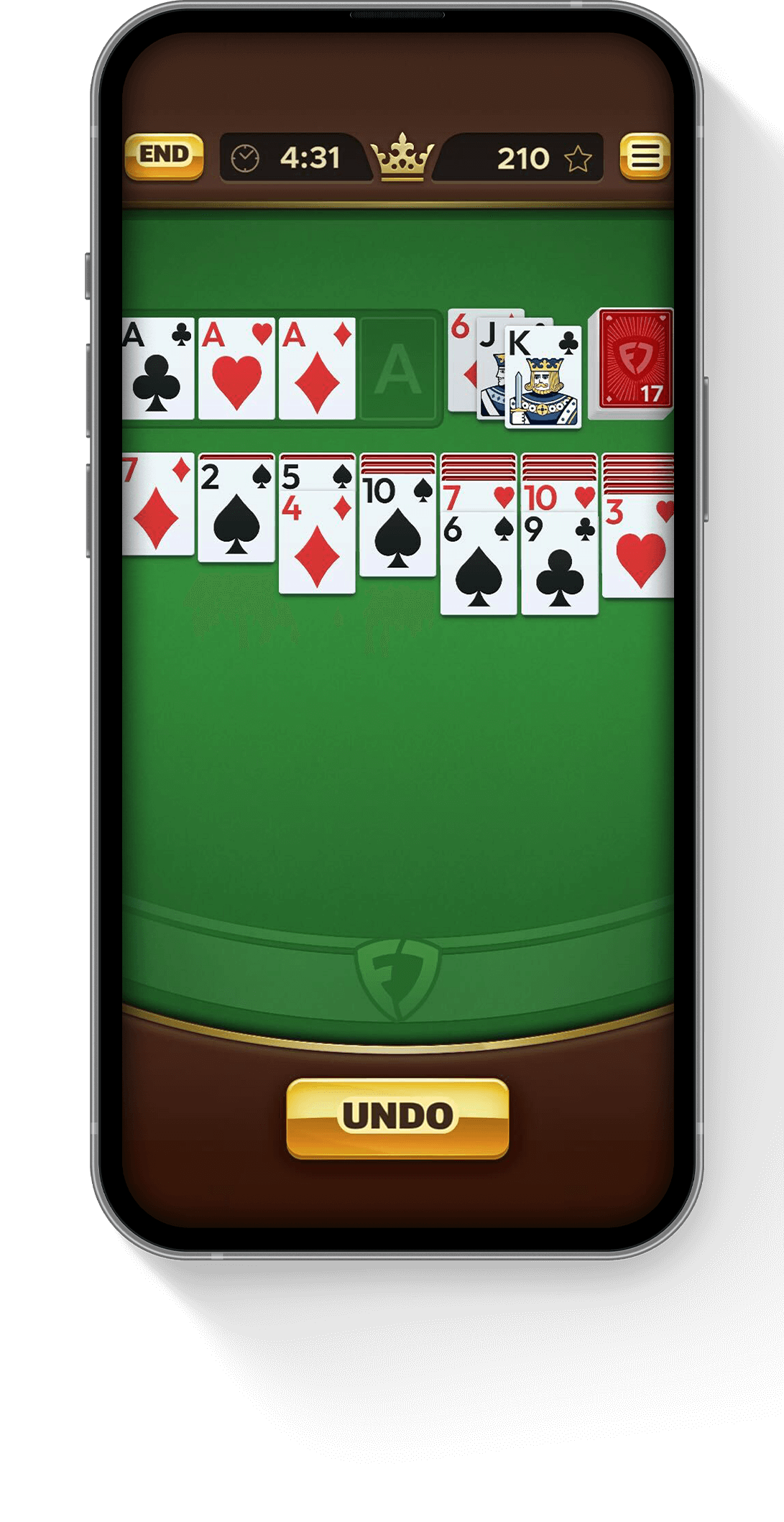
You’ll begin with a standard deck of 52 playing cards. The deck is shuffled and dealt in seven columns, with the first column having one card, the second having two, the third having three, and so on. The top card in each column is face-up, and the rest are face-down. These seven piles are called the “tableau.”
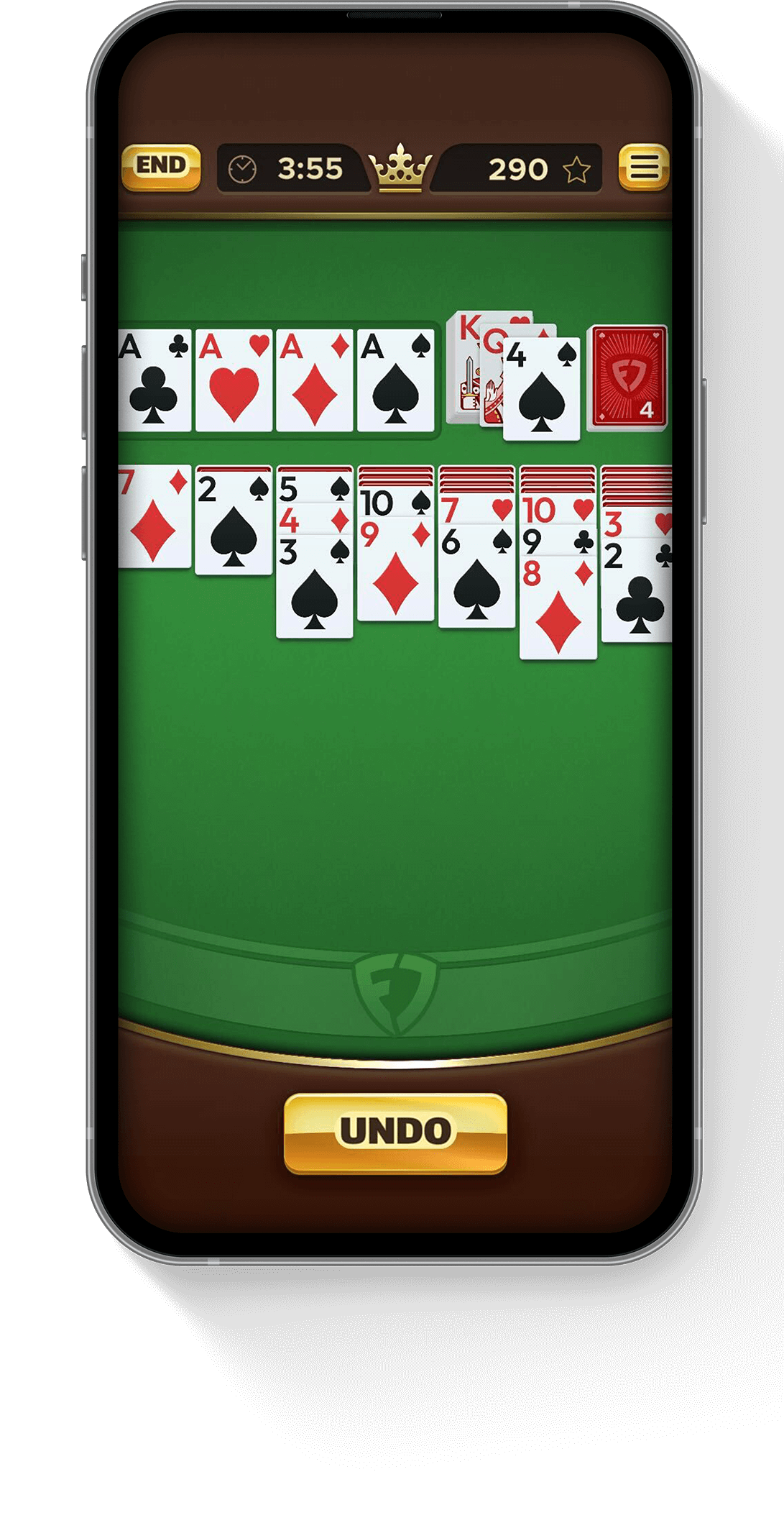
On the top right, you’ll find the draw pile. This holds the rest of the 52 cards. Finally, the top left of the table is where you’ll build your four ace piles — one for each suit.
Build ace piles
As you uncover ace cards, you can place them in one of the four ace piles. Once an ace pile starts, you can continue to add cards of the same suit in ascending order. For example, if you placed the ace of hearts in an ace pile, you can then add the 2 of hearts, then the 3 of hearts, and so on, until you reach the king of hearts. Building these ace piles is the key to a high score, as it's how you ultimately organize all 52 cards and complete the puzzle.
Once a card has been placed on the ace pile, it can be moved back to the tableau, but it’ll cost you points.
Move cards
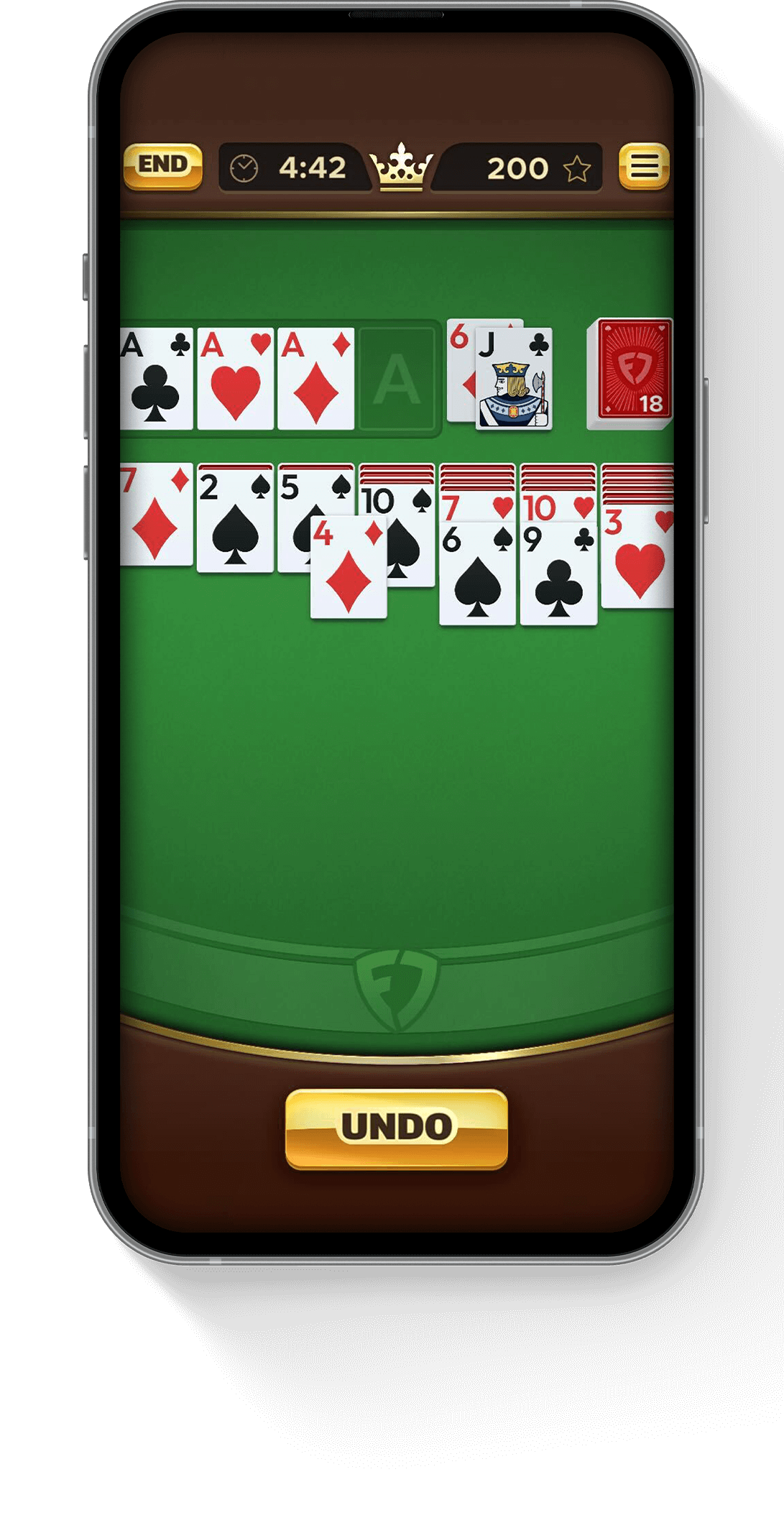
In order to fill all ace piles, you’ll also need to sort the cards in the tableau and the draw pile. You can move a card onto another card on the tableau if it's one rank higher and has a different color. For example, you can only put a red 5 on a black 6. Once you start stacking cards, you can also move them in groups. For example, you can stack a black 7 on a red 8, and move that stack onto a black 9.
When you move a card in the tableau, you might uncover a downward-facing card. When a card is uncovered, it will turn to face up. Then, you’ll be able to use the uncovered card to keep sorting the deck.
Use the draw pile
If you can't make any more moves in the tableau, you can tap the draw pile to be dealt one or three new cards (depending on your game mode). If you can use a card from the draw pile, drag it to the tableau or ace piles. You can keep turning over cards from the draw pile until you find a card you can use. But beware — after you reset the pile twice, resetting the draw pile again will cost you twenty points.
If you’re playing a mode where you’re dealt three cards, you can only use face-up card at the top of the pile. Once you use the face-up card, you’ll be able to use the card that was underneath.
Create empty tableau slots
You may need to clear out some of the tableau slots as you play. This allows you to uncover face-down cards and gives you more space to move cards around. You can only place kings or groups of cards that start with kings in empty tableau slots.

Game end
The game ends when all 52 cards have been revealed and moved to the ace piles or until there are no moves remaining.
Scoring
• Revealing a card: 10 points
• Playing a card from the Deck: 10 Points
• Ace pile buildup: Moving the ace to the ace is worth 50 points and every card after that is worth 5 less until it hits 5 points.
• Reset the draw pile: -20 points (after your two free resets are used)
• Time bonus: Completing a game will award you bonus points based on the time remaining.
• Time Bonus = 1 pt x (seconds remaining x % cards moved to foundation)
Tips
• Flip the top cards of the draw pile first.
• Start with longer stacks.
• Distribute cards in the card columns evenly.
• Don’t leave open columns if you don’t have any Kings.
• Always move aces and twos to the ace piles.
• Think about which kings to use in empty card columns.
• If you get stuck in an unwinnable position, tap End Game and receive a bonus for remaining time.